

High Quality Acrylic Display Cases: A 2026 Guide
Table of Contents
- What Makes a High-Quality Acrylic Display Case
- Cast vs Extruded Acrylic for Display Cases
- Why Do Acrylic Edges Look Rough
- How to Clean Acrylic Display Cases Without Scratching
- Acrylic Display Cases for Different Applications
- Custom Sized Display Cases and Bespoke Manufacturing
- Assembly, Maintenance and Long-Term Care
- Frequently Asked Questions
Last Updated: September 21, 2026
What Makes a High-Quality Acrylic Display Case
A high-quality acrylic display case delivers crystal-clear visibility, resists yellowing, and showcases items without distortion. The difference between mediocre and exceptional cases comes down to material selection, manufacturing precision, and edge finishing.
At Acrylic Display uk, we've spent over 30 years perfecting these details through precision craftsmanship.
Optical Clarity and UV Stabilisation
Optical clarity is how transparent and distortion-free the acrylic appears. Poor-quality acrylic contains micro-bubbles, inconsistent thickness, or hazy patches; premium acrylic maintains crystal-clear visibility from any angle.
UV stabilisation is critical: unprotected acrylic yellows within months of sunlight exposure, while UV-stabilised acrylic maintains clarity for years. UV protection is essential for collectibles, memorabilia, and retail displays.
When examining samples, hold them to light and look through at an angle, genuine clarity feels invisible.
Edge Finish and Polishing Standards
Acrylic edges reveal manufacturing quality instantly: rough, cloudy edges signal poor finishing; smooth, polished edges indicate precision and improve light transmission.
Polishing requires progressive sanding through multiple grits, then buffing, a labour-intensive step that separates quality manufacturers from those cutting corners. At Acrylic Display uk, all edges are polished as standard.
Cast vs Extruded Acrylic for Display Cases
The acrylic you choose, cast or extruded, fundamentally affects your display case's performance and cost. Both are legitimate materials, but they serve different purposes.
Performance Differences in Thickness and Durability
Thickness affects durability and optical performance: 3mm works for small cubes or lightweight items; 5mm or 8mm provides rigidity, impact resistance, and superior clarity through more even light transmission.
Cost and Application Considerations
Cast acrylic justifies its 20-40% higher cost when displaying valuable items, building long-term installations, or where brand reputation depends on visual quality.
Why Do Acrylic Edges Look Rough
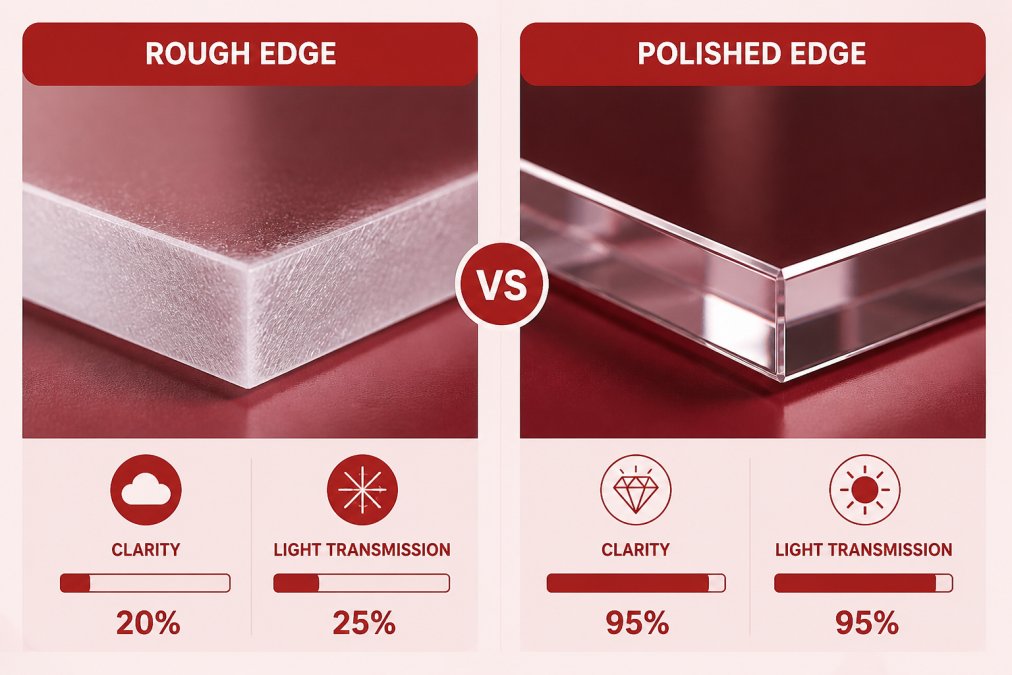
Rough acrylic edges are one of the most common complaints about low-quality display cases. Understanding why edges look rough helps you identify quality during selection and avoid poor manufacturers.
Common Causes of Poor Edge Quality
Rough edges result from inadequate sanding and polishing. Cutting creates a micro-fractured surface requiring progressive sanding through multiple grits (120, 220, 400, 600, 1000) and buffing.
Many manufacturers skip or rush this process, creating frosted or cloudy edges where light scatters instead of passing through cleanly.
Budget manufacturers use cheaper cutting equipment that leaves ragged edges, then skip the finishing work that diamond-blade saws would reduce.
Improper cutting speeds generate friction heat that melts acrylic slightly, creating rough edges. Skilled manufacturers control speed and use coolant to prevent this.
How Polished Edges Improve Display Appearance
Polished edges transform cases from industrial to premium: light passes through cleanly, creating seamless connection to displayed items. Rough edges scatter light, drawing attention to the case rather than contents.
Polished edges signal quality and care; rough edges suggest hasty assembly. This matters for home collectibles, retail products, or professional memorabilia displays.
Polishing removes micro-fractures that propagate into cracks under stress, making polished edges more durable.
How to Clean Acrylic Display Cases Without Scratching
Acrylic is softer than glass, making it more prone to scratching. Proper cleaning technique preserves optical clarity and prevents permanent damage.
Safe Cleaning Materials and Techniques
Never use paper towels, tissues, or abrasive cloths, they scratch acrylic. Use soft microfibre cloths designed for delicate surfaces.
Use distilled water or distilled water with mild dish soap. Avoid ammonia or alcohol-based cleaners, which cloud acrylic or cause stress cracking.
Dampen the cloth and gently wipe using light pressure and circular motions, never scrub. Air-dry or dry gently with a clean microfibre cloth.
For stubborn dust, use a soft brush or compressed air in short bursts without touching the surface.
Removing Light Scratches and Maintaining Clarity
Minor scratches are often cosmetic. Fine polishing compound designed for acrylic can reduce visible scratches, apply with a soft cloth using gentle circular motions.
Prevention is more effective: keep cases away from direct sunlight, dust regularly with soft cloths, avoid abrasive contact, and handle removable components carefully.
Display Cabinet 5mm Perspex Acrylic →
Acrylic Display Cases for Different Applications
Different uses demand different case designs. A retail point-of-sale display has different requirements than a museum collectibles case or a home memorabilia showcase.
Wall-Mounted vs Desktop Models
Wall-mounted cases save floor space and create eye-level impact for retail, galleries, and home displays. They must be securely anchored to prevent dropping and damage.
Desktop models sit on shelves, tables, or counters, offering flexible placement and easy relocation for home collectors, small retail, and portable exhibitions.
Choice depends on space, item value, and audience. Retail prefers wall-mounted for visibility; museums and collectors use desktop models with locking mechanisms.
Retail and Exhibition Display Solutions
Retail displays balance visibility with security: open-top cubes suit low-theft items; lockable cabinets protect higher-value merchandise.
For trade shows, portable cases with lightweight acrylic and collapsible frames must survive repeated packing and shipping while maintaining clarity and appearance.
Exhibition displays often require custom dimensions to fit booth layouts or display specific product ranges. Bespoke manufacturing allows retailers and exhibitors to create cases that perfectly match their brand and space requirements.
Protecting Collectibles and Memorabilia
Collectibles and memorabilia require cases that protect against dust, light damage, and physical contact. A high-quality acrylic display case with UV stabilisation, dust-proof sealing, and secure locking keeps treasured items safe for years.
Sports memorabilia, signed items, vintage figures, and rare collectibles all benefit from protective enclosure. The case should be transparent enough that viewers can appreciate the item without touching it, yet protective enough to prevent degradation.
Our Display Cabinet 5mm Perspex Acrylic Lock 2 Keys & Removable Shelves Choices is purpose-built for this use. The 5mm cast acrylic provides optical clarity, the locking mechanism secures valuable items, and removable shelves accommodate different display heights and configurations.

Custom Sized Display Cases and Bespoke Manufacturing
Standard sizes don't always fit your needs. Bespoke acrylic display cases allow you to specify exact dimensions, materials, and features tailored to your requirements.
Measuring and Specifying Your Requirements
Accurate measurements are essential. Measure the item you're displaying, then add clearance, typically 25-50mm on each side depending on how much visibility you want. Consider the height of your display space and how the case will be accessed (from the front, top, or sides).
Document any special features you need: locking mechanisms, removable shelves, specific base colours, or internal stands. Provide reference images of your items and your display space. The more detail you provide, the better the final result.
If you need displays rolled out across multiple locations, ordering early allows time for samples and refinement before full production.
Base Material Options and Finishes
The base, the platform your case sits on, affects the overall aesthetic and functionality. Common options include:
| Base Material | Best For | Characteristics |
|---|---|---|
| Wood | Premium displays, home collections | Warm appearance, customisable stain/finish |
| MDF (medium-density fibreboard) | Cost-conscious retail, temporary displays | Budget-friendly, available in various colours |
| Acrylic | Modern retail, minimalist design | Matches the case, clean aesthetic |
| Metal | High-security, industrial settings | Durable, professional appearance |
Wood bases offer warmth and sophistication, ideal for displaying collectibles in home settings or upmarket retail environments. MDF provides budget-friendly options with colour flexibility. Acrylic bases create a seamless, modern look where the entire display appears to float. Metal bases suit high-security applications or industrial aesthetics.
Your base choice should complement both your displayed items and your display environment. A retail product showcase might use a colour-matched acrylic base.
Assembly, Maintenance and Long-Term Care
How you assemble and maintain your acrylic display case determines its longevity and appearance.
Assembly Instructions and Locking Mechanisms
Locking mechanisms range from simple magnetic catches to cam locks with keys. For valuable items, cam locks with two keys (one for display access, one as backup) provide security without looking institutional. Test the lock mechanism before displaying valuable items to ensure it functions smoothly and holds securely.
Preventing Yellowing and Maintaining UV Protection
UV-stabilised acrylic resists yellowing, but environmental factors still matter. Direct sunlight accelerates degradation even in UV-stabilised material. Position your display case away from south-facing windows or use UV-filtering window film to reduce light exposure.
Temperature fluctuations can also affect acrylic. Avoid placing cases near heating vents, air conditioning units, or radiators where temperature swings are extreme. Stable room temperature (18-22°C) is ideal.
Dust and dirt accumulation can make acrylic appear cloudy.
Frequently Asked Questions
What makes a high-quality acrylic display case different from a standard one?
High-quality acrylic display cases use UV-stabilised material with optical clarity, polished edges, and precision manufacturing. They resist yellowing over time, maintain transparency, and feature smooth finishes. Thickness matters too, 5mm acrylic provides better load-bearing and stability than thinner alternatives. Quality cases use cast or extruded acrylic with proper joinery and locking mechanisms to protect valuable collectibles long-term.
What's the difference between cast and extruded acrylic for display cases?
Cast acrylic offers superior optical clarity, better UV resistance, and greater thickness consistency, making it ideal for museum-grade and long-term display. Extruded acrylic is more affordable and suitable for standard retail displays but can yellow faster and offers less impact resistance. For high-value memorabilia, cast acrylic is the better choice despite higher cost.
How do I prevent scratches and yellowing in acrylic display cases?
Clean with soft, lint-free cloths and avoid abrasive materials. Use anti-static products designed for acrylic to reduce dust attraction. UV-stabilised acrylic resists yellowing, but position cases away from direct sunlight when possible. For existing light scratches, polishing compounds designed for acrylic can restore clarity. Store protective films or covers over cases during transport and storage.
Can acrylic display cases be made to custom dimensions?
Yes, bespoke manufacturing allows custom sizes tailored to your specific memorabilia or retail requirements. Manufacturers can produce made-to-measure cases with custom base colours, removable shelves, and locking mechanisms. Specify exact dimensions during ordering, and manufacturers can deliver samples before full production to ensure the case meets your brand and display standards.