

Custom Acrylic Memorabilia Case Dimensions Guide
Table of Contents
- Understanding Internal vs External Dimensions
- Measuring Sports Memorabilia for Display
- Selecting Acrylic Thickness for Display Cases
- Clearance and Tolerance Calculations
- Using a Bespoke Acrylic Display Case Calculator
- Common Display Case Sizes and When to Use Them
- Customisation Options and Base Materials
- Ordering Your Custom Case: What to Expect
- Frequently Asked Questions
Last Updated: October 2, 2026
Understanding Internal vs External Dimensions
The difference between internal and external dimensions determines how much space your memorabilia actually has inside the case. This matters because a case that looks big enough on paper might leave your collectible cramped or unable to fit at all.
External dimensions are the measurements around the outside of the acrylic case. They tell you how much shelf or wall space the case will occupy. Internal dimensions are the usable space inside, where your memorabilia actually sits. The gap between them is the thickness of the acrylic walls and base.
Most people focus on external size and get disappointed when their item doesn't fit comfortably. The acrylic thickness, base height, and panel construction all eat into usable space. A case that's 350mm wide externally might only offer 310mm of internal width once you account for the acrylic panels on both sides.
Why the difference matters for your memorabilia
Getting this wrong means your collectible either won't fit, or it will fit so tightly that you can't insert or remove it safely. Tight fits also risk scratching acrylic or damaging the item during installation.
The base plate adds height that reduces the usable space above your memorabilia. A 20mm base plate means 20mm less vertical clearance. If you're displaying a graded card slab or a small figure, this matters. If you're showing a sports jersey, you need to account for how the fabric will hang or fold inside the case.
Calculating usable space
Start with the internal dimensions you need for your memorabilia. Add clearance margins (we'll cover this in detail later). Then confirm those internal measurements match what the manufacturer quotes.
Most manufacturers will give you both internal and external dimensions in their specifications. If they only quote external size, ask for internal measurements before ordering. This prevents costly mistakes.
Measuring Sports Memorabilia for Display
Measuring your collectible correctly is the foundation for ordering a case that actually fits. Poor measurements lead to cases that are too small, too large, or have awkward clearance.
Tools you'll need
Gather these before you start:
- Steel tape measure (at least 2 metres long)
- Notepad and pen
- Ruler or straight edge
- Callipers (optional, for precise measurements)
- Photograph or scale reference
Don't use soft fabric tape measures, they stretch and give inaccurate readings. Steel tape measures stay rigid and consistent.
Step-by-step measurement process
Step 1: Measure length, width, and height of your item
Place your memorabilia on a flat surface. Measure the longest dimension first. Write it down in millimetres. Repeat for width and height. Take measurements at the widest or tallest points, not at edges or corners where the item might be narrower.
Step 2: Check for protrusions or irregular shapes
Sports memorabilia often has irregular shapes. A signed baseball has a curved surface. A jersey on a hanger extends beyond its flat dimensions. A framed photo might have a thick frame that adds depth. Measure the furthest points in all directions.
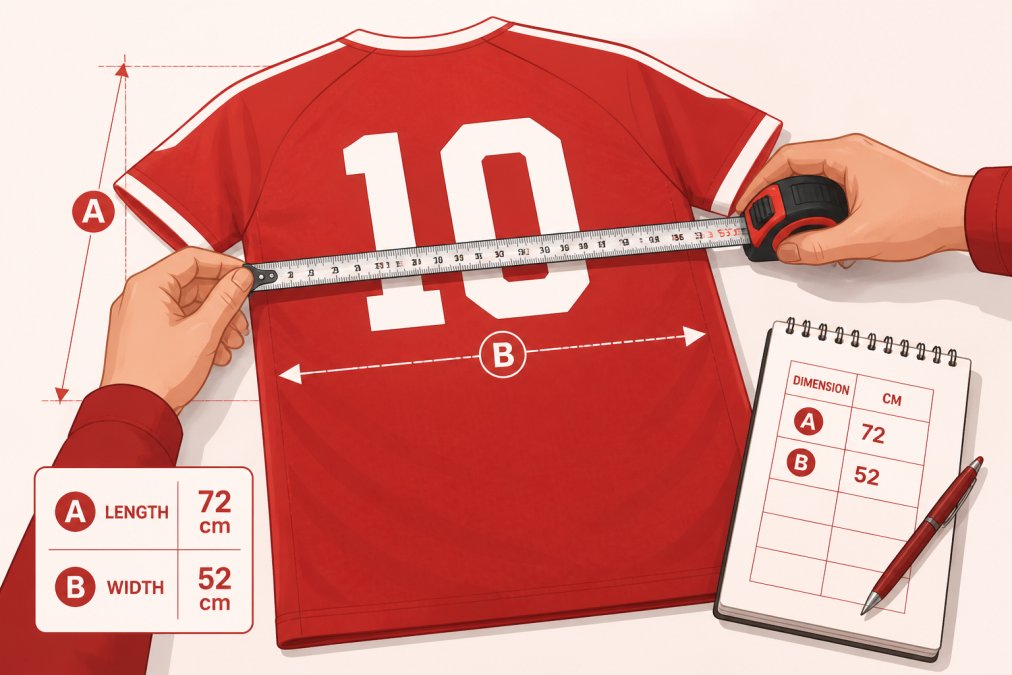
Step 3: Account for mounting or display hardware
If your memorabilia needs a stand, mount, or support inside the case, measure the total height including the stand. A sneaker display stand adds 30-50mm.
Step 4: Record all three dimensions in millimetres
Selecting Acrylic Thickness for Display Cases
The thickness of acrylic panels affects both the appearance and durability of your custom acrylic memorabilia case dimensions. Thicker acrylic looks more substantial and offers better protection. Thinner acrylic is lighter and cheaper but offers less structural support.

Thickness recommendations by case size
Small cases (under 300mm on any side) typically use 3mm acrylic. This thickness provides adequate rigidity and optical clarity for items like graded card slabs, small figurines, or compact collectibles.
Poster Holder Quality 2 piece wall mount certificate, diploma, award →
UV protection and optical clarity
UV-stabilised acrylic resists yellowing and keeps items looking fresh for years.
Clearance and Tolerance Calculations
Clearance is the gap between your memorabilia and the inside edges of the case. Tolerance refers to how precisely the manufacturer can build to your specified dimensions. Both matter for a professional result.
Adding safe clearance margins
Never order a case with internal dimensions that exactly match your memorabilia size. You need space to insert and remove the item safely, and to account for slight variations in how the memorabilia sits.
Accounting for base plate height
The base plate sits inside the case and raises your memorabilia off the bottom. Standard base plates are 15-25mm tall. This reduces the vertical clearance available inside the case.
Using a Bespoke Acrylic Display Case Calculator
A bespoke acrylic display case calculator helps you convert your memorabilia measurements into case specifications. It accounts for clearance, base height, and acrylic thickness automatically.
How to input your measurements
Start with your memorabilia's length, width, and height in millimetres. Enter the desired clearance (typically 10-15mm). Specify the base plate height if your case will have one. Select the acrylic thickness you want.
Volume calculation and weight-bearing capacity
Volume tells you how much space is inside the case. Length × width × height (all in millimetres) gives you volume in cubic millimetres. Divide by 1,000,000 to get cubic metres if needed.
Common Display Case Sizes and When to Use Them
Standard sizes exist because they fit common memorabilia types. Knowing these sizes helps you decide whether to order bespoke or go with a ready-made option.
Graded card slab and sneaker display standards
A graded card slab (PSA, BGS, or similar) measures roughly 65mm × 95mm × 20mm. Cases for single cards are typically 100mm × 130mm × 50mm external. These fit neatly on shelves or in collector cabinets.
Retail counter and shelf-mounted options
Retail counter displays sit on checkout counters or high-traffic areas. These are usually compact: 200mm × 150mm × 200mm or smaller. They hold small items like perfume bottles, jewellery, or collectible figurines.
Customisation Options and Base Materials
Your case doesn't have to be plain acrylic. Customisation options let you match your memorabilia's style and your space's décor.
Wooden base vs polycarbonate alternatives
A wooden base adds warmth and professional appearance. Wooden bases can be stained, painted, or left natural. They suit museum displays, retail environments, and home collections.
Mitre joints and assembly considerations
Some cases arrive flat-packed for assembly on-site. Others come fully assembled and ready to display. Ask your manufacturer which option suits your needs.
Ordering Your Custom Case: What to Expect
The ordering process for a bespoke acrylic memorabilia case typically takes 2-4 weeks from order to delivery, depending on complexity and current demand.
Quality checks and packing for safe delivery
Reputable manufacturers inspect every case before packing. They check for scratches, cracks, misaligned panels, and rough edges.
Handling samples before full production
If you're ordering multiple cases or a large rollout, request a sample first. A sample lets you inspect quality, check dimensions, and confirm the finish matches your expectations. This prevents costly mistakes on a full production run.
| Aspect | Consideration | Action |
|---|---|---|
| Internal dimensions | Must fit memorabilia plus clearance | Measure carefully, add 10-15mm clearance |
| Acrylic thickness | Affects durability and weight capacity | Choose 3-5mm based on case size and item weight |
| Base plate height | Reduces vertical usable space | Confirm height, subtract from internal dimensions |
| UV protection | Prevents yellowing over time | Specify UV-stabilised acrylic for long-term display |
| Clearance margins | Allows safe insertion and removal | Add 10mm minimum, 15mm for large items |
| Customisation options | Affects appearance and cost | Consider wooden base, mitre joints for professional look |
Frequently Asked Questions
How do I accurately measure my memorabilia for a custom acrylic display case?
Measure the length, width, and height of your item using a steel tape measure in millimetres. Always measure the widest point to avoid undersizing. Add 5-10mm clearance on all sides to prevent friction during placement. For valuable items like graded card slabs or sneaker displays, measure twice and round up. Note the base thickness separately, most bespoke cases have a 20mm base, so account for this in your height calculation to ensure your memorabilia sits properly inside.
What is the recommended acrylic thickness for display cases?
Standard acrylic thickness for display cases ranges from 2mm to 5mm depending on size. Small cases (under 300mm on any side) work well with 3mm acrylic; medium cases (300-600mm) typically use 4mm; larger cases require 5mm or thicker for structural integrity. UV-stabilised Perspex offers superior optical clarity and protects collectibles from yellowing over time. Always specify thickness when ordering to ensure your case maintains its protective casing integrity and optical clarity for memorabilia.
Can I get an acrylic display case custom-sized?
Yes, made-to-measure acrylic cases are available with millimetre precision. Rather than settling for standard sizes, you can specify exact internal and external dimensions to fit your memorabilia perfectly. Most manufacturers, including those with 30+ years of experience, offer custom fabrication for single pieces or bulk retail rollouts across multiple locations.
Should I add extra clearance when calculating display case dimensions?
Yes, adding clearance is essential. A minimum of 5mm on each side prevents your memorabilia from touching the acrylic panels, which can cause scratches or pressure marks. For delicate items like masks or graded cards, 10mm clearance is safer. Also account for base plate height, typically 20mm, when calculating total internal height. This tolerance ensures your collectible sits securely.