

Best Acrylic Display Case Manufacturers
Table of Contents
- Top Acrylic Display Case Manufacturers and Their Key Offerings
- Quick Comparison Table: Features, Pricing and Specifications
- Bespoke Acrylic Display Cases: Custom Fabrication Services
- Material Thickness and Durability: What You Need to Know
- Acrylic Display Case Thickness Guide: Choosing the Right Specification
- How to Clean Acrylic Display Cases and Maintain Optical Clarity
- Why Choose Acrylic Over Glass and Polycarbonate
- Conclusion
- Frequently Asked Questions
Last Updated: September 23, 2026
Top Acrylic Display Case Manufacturers and Their Key Offerings
The best acrylic display case manufacturers combine optical clarity, durability, and precision craftsmanship. At Acrylic Display uk, we've spent over 30 years perfecting bespoke acrylic display solutions for retailers, collectors, and institutions.
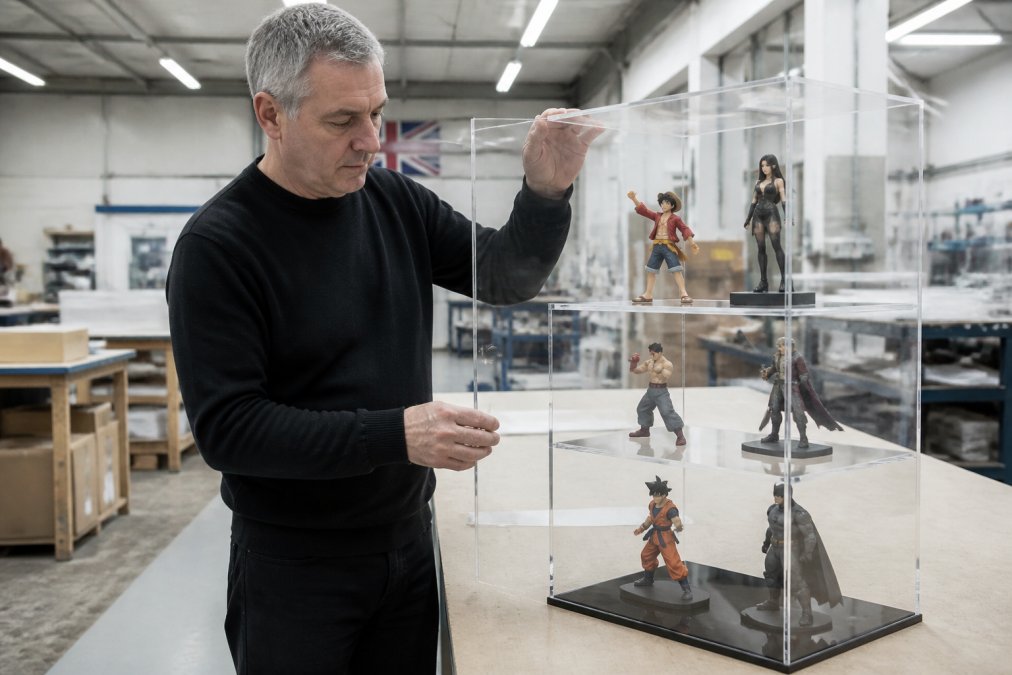
The difference between a standard acrylic display case and a museum-grade solution comes down to material thickness, edge finishing, and UV resistance.
Acrylic Display uk manufactures custom-sized acrylic display cases entirely in our UK factory with hand-finished detailing. Our range includes lockable cabinets with removable shelves, curved glass-effect cases, and bespoke fabrication services. We handle projects from single museum-quality cases to 50+ retail rollouts without compromising quality.

Our range spans from entry-level cases at £75.90 to premium wall-mounted displays at £585.00. Each piece is UV stabilised, shatterproof, and polished-edge finished. We also offer bespoke plinths, engravings, and bulk discounts.
Quick Comparison Table: Features, Pricing and Specifications
| Product | Material Thickness | Starting Price | Key Features | Best For |
|---|---|---|---|---|
| Display Cabinet with Lock & Removable Shelves | 5mm clear acrylic | £133.92 | Hinged door, 2 keys, polished edges, multiple sizes | Secure collectables storage |
| Glass Look Cabinet with Cam Lock | 5mm polished glass-effect | £154.20 | UV stabilised, 2 removable shelves, non-slip feet | Jewellery, ornaments, models |
| Glass Look Cabinet with Crystal Handle | 5mm polished glass-effect | £159.00 | UV stabilised, 2 removable shelves, premium handle | High-end retail displays |
| Curved Clear Cabinet with 4 Shelves | 5mm clear perspex | £171.82 | Individual hinged doors, UV protected, fixed shelves | Bakery, pastries, premium items |
| Curved Glass-Effect Cabinet with 4 Shelves | 5mm polished glass-effect | £186.34 | Individual hinged doors, UV stabilised, curved design | Retail showcase, exhibition |
| Memorabilia Display Case | UV stabilised acrylic | £75.90 | Cube design, internal stand, choice of base colours | Sports memorabilia, figures |
| Jewellery Counter Display | Crystal clear acrylic | £80.00 | Lockable, cam lock with 2 keys, base colour options | Market stalls, jewellery counters |
| Crash Helmet Display with Plinth | 5mm UV protected acrylic | £140.00 | Free-standing plinth, polished edges, bulk discounts | Motorsports, collectibles |
| F1 Motorsport Full-Size Display | 5mm clear UV acrylic | £585.00 | Wall-mounted, laser-cut hanger, choice of backboard colours | Premium memorabilia, museum display |
Bespoke Acrylic Display Cases: Custom Fabrication Services
Bespoke fabrication lets you specify exact dimensions, material thickness, locking mechanisms, and finishing details, where precision craftsmanship separates hand-made quality from mass production.

We work directly with retail chains, museum curators, and collectors. Our process starts with your specifications, from 2-metre retail counters to compact cubes.
Bespoke work offers dimensional accuracy: optimise shelf spacing, stand placement, and footprint to match your exact space. Lead times run 2-3 weeks from approval.
Material Thickness and Durability: What You Need to Know
Most quality acrylic display cases use 5mm material, balancing strength with light transmission and ensuring durability without warping or cloudiness.

5mm acrylic provides excellent optical clarity and structural strength, resisting flexing and bumps while maintaining transparency when UV-stabilised.
Thinner acrylic (3mm or less) flexes more and yellows faster; thicker material (8mm+) adds unnecessary weight and cost.
Polished edges refract light cleanly and enhance optical clarity; raw edges scatter light and look cheap. All Acrylic Display uk cases feature polished edges as standard.
Acrylic Display Case Thickness Guide: Choosing the Right Specification
Retail displays and jewellery cases: 5mm handles standard weight and frequent opening without flex.
High-value memorabilia or museum pieces: 5mm with UV stabilisation and locking mechanism.
Large floor-standing cabinets: 5mm is adequate with reinforced base; structural support comes from design, not thickness.
Curved displays: 5mm maintains curve without warping. Most acrylic display case manufacturers default to 5mm because it's cost-effective and performs reliably.
How to Clean Acrylic Display Cases and Maintain Optical Clarity
Acrylic requires different care than glass. Harsh chemicals and abrasive cloths create micro-scratches that accumulate into visible cloudiness. Proper cleaning preserves optical clarity and extends lifespan.
Daily and Weekly Cleaning Routine
Dust weekly with a soft microfibre cloth to prevent particle buildup. Particles act like sandpaper, creating micro-scratches that compound into visible haze. Weekly dusting prevents the need for aggressive cleaning.
For light marks, dampen the cloth with lukewarm distilled water only. Wipe gently in circular motions, then dry immediately to prevent water spots. Never let water sit on acrylic; tap water leaves permanent mineral deposits.
Monthly Deep Cleaning
For stubborn marks, mix one drop of pH-neutral dish soap with 500 ml lukewarm distilled water. Dampen the cloth (never apply liquid directly to acrylic). Wipe gently, then dry immediately.
For mineral deposits, use equal parts white vinegar and distilled water on the cloth. Vinegar dissolves buildup without damaging acrylic. Dry thoroughly.
Chemicals to Avoid
Never use window cleaners, alcohol, acetone, or solvent-based cleaners, these degrade acrylic. Avoid abrasive sponges, paper towels, and pressure washers.
Display Cabinet 5mm Perspex Acrylic →
Polishing and Scratch Removal
Minor surface scratches can be buffed out with acrylic-specific polishing. Most scratches are avoidable with proper cleaning discipline.
For light scratches, apply acrylic polish to a soft cloth and buff in circular motions for 30-60 seconds. The polish fills micro-scratches and restores clarity.
For deeper scratches (visible to touch), use 2000-grit or higher sandpaper. Wet-sand gently in one direction using vinegar-and-water solution as lubricant. After sanding, apply acrylic polish and buff. This works for scratches up to 1-2 mm; deeper damage requires professional refinishing.
Preventative Maintenance Checklist
- Dust weekly with a soft microfibre cloth.
- Use distilled water only for damp cleaning.
- Avoid direct sunlight for extended periods; position away from south-facing windows.
- Control humidity at 40-60% relative humidity.
- Inspect seams monthly for dust buildup.
- Avoid stacking heavy items on cases.
- Keep away from heat sources (radiators, direct sunlight); acrylic warps above 70°C.
Long-Term Clarity Maintenance
With proper care, UV-stabilised acrylic maintains 95%+ optical clarity for 10+ years. Weekly dusting and avoiding harsh chemicals preserve surface integrity.
Why Choose Acrylic Over Glass and Polycarbonate
Glass, acrylic, and polycarbonate differ fundamentally in optical properties, mechanical performance, cost, and longevity. Understanding these differences prevents costly material mismatches.
Optical Clarity and Light Transmission
Acrylic and glass transmit ~92% of visible light versus polycarbonate's 88%. Acrylic's clarity advantage over polycarbonate becomes pronounced over time: polycarbonate yellows after 5-7 years, while UV-stabilised acrylic maintains clarity for 10+ years. Glass never yellows but is brittle and heavy.
Impact Resistance and Safety
Polycarbonate is toughest for high-impact environments. Acrylic is shatterproof but flexes under severe impact; glass shatters into dangerous shards.
Weight and Handling
Scratch Resistance
Cost and Value Over Time
Environmental and Recycling Considerations
Material Selection Guide
| Factor | Acrylic | Glass | Polycarbonate |
|---|---|---|---|
| Optical Clarity (10-year retention) | 95%+ | 100% (no yellowing) | 80-85% (amber shift) |
| Impact Resistance | Good (shatterproof) | Poor (shatters) | Excellent (highest) |
| Weight (5mm per m²) | 6 kg | 12.5 kg | 5.8 kg |
| Scratch Repairability | Excellent (polish-able) | Poor (replacement needed) | Moderate (visible residue) |
| Cost (relative) | £ (baseline) | £££ (2-3× acrylic) | ££ (1.2-1.5× acrylic) |
| Lifespan (display use) | 10-15 years | 15+ years (if unbroken) | 5-7 years (yellowing) |
| Recyclability | Yes, widely accepted | Yes, heavier logistics | Yes, limited streams |
Conclusion
The best acrylic display case manufacturers combine material quality, precision fabrication, and responsive service. Acrylic Display uk delivers all three, over 30 years of hand-crafted expertise, UK factory control, and bespoke solutions for projects of any scale.
Frequently Asked Questions
What is the difference between acrylic and Perspex display cases?
Acrylic and Perspex are essentially the same material, polymethyl methacrylate (PMMA). The terms are used interchangeably, with Perspex being a branded version commonly used in the UK. Both offer optical clarity, UV resistance, and shatterproof properties. The key advantage over glass is that acrylic is lighter, more durable, and safer for displaying valuable collectibles.
How do I choose the right thickness for an acrylic display case?
Most quality display cases use 5mm acrylic, which provides excellent durability and optical clarity for standard collectibles, jewellery, and retail displays. Thinner acrylic (3mm) works for small decorative items but offers less protection. Consider the weight of your items and the case dimensions when deciding.
Are bespoke acrylic display cases worth the investment?
Yes, bespoke cases are worthwhile if you need specific dimensions, custom colours, or specialised features like individual hinged doors or engraved plinths. Off-the-shelf cases often don't fit unusual spaces or brand requirements. For retail rollouts across multiple locations or museum exhibits, bespoke fabrication ensures consistency and precision that standard options cannot match.
How should I clean and maintain my acrylic display case?
Use a soft microfibre cloth with warm water and mild soap to clean acrylic surfaces. Avoid harsh chemicals, solvents, or abrasive cloths that cause scratching. Dry immediately with a lint-free cloth to prevent water spots. For stubborn marks, use a dedicated acrylic cleaner. Store away from direct sunlight to preserve UV protection and prevent yellowing over time.
Do manufacturers offer UV-protected acrylic options?
Yes, UV-stabilised acrylic is standard in quality display cases. This protection prevents yellowing and cloudiness caused by prolonged sunlight exposure, keeping your displays optically clear for years. Most premium manufacturers, including those offering museum-grade solutions, include UV protection as standard across their range.